Tag: UK Supreme Court
-

Crash Krylova: Trans People in Prison: For Women Scotland v Scottish Ministers [2026] CSOH 59
Introduction On 19 June 2026, the Outer House of the Court of Session handed down judgment in the case of For Women Scotland v Scottish Ministers [2026] CSOH 59 (“For Women Scotland 3”). This piece is intended as a critique of that judgment, exploring the relevance of the Equality Act 2010 and the Schedule 22(1)…
-

Alex Schwartz: Recent Attempts to Curb Judicial Power in the United Kingdom
The era of Conservative Party government from 2015–2024 was one of great constitutional turmoil in the United Kingdom. In addition to (and partly because of) the controversies surrounding the UK’s withdrawal from the European Union, this was also a period of heightened debate about the role of the judiciary, fuelling an unprecedented movement within and…
-
Anurag Deb and Nicholas Kilford: Conditioning the UK Parliament’s Power to Legislate for a Devolved Part of the UK: Part II – Some Challenges Posed by Northern Ireland
Introduction In its judgments in Continuity Bill and Treaty Incorporation, the Supreme Court identified what we describe in the first part of this post as the ‘conditioning limitation’. The purpose of that first part was to demonstrate how the conditioning limitation potentially threatens otherwise constitutionally innocuous or unexceptional exercises of devolved legislative power. Although those…
-
Penelope Cassandra Webb: Silences, Spectacle, and the Limitations of Law
The decision of the UK Supreme Court in For Women Scotland Ltd v Scottish Ministers [2025] is one that has generated a rapid response, from the photos of those celebrating the decision on the steps of the UKSC, to the massive wave of protest from trans people and allies. Within the legal world, it has…
-
Antonia Layard: Darwall and the Public Life of Private Property
When wealthy landowners, Alexander and Diana Darwall, sued a national park authority to stop people pitching their tents on the Dartmoor Commons, few expected the dispute to take a constitutional turn. Yet this was the outcome of Darwall v Dartmoor National Park Authority[2025] UKSC 20, where the Supreme Court’s decisive rejection of the landowners’ claims…
-
Michael Foran: For Women Scotland: Is legal recognition of biological sex a violation of human rights?
In For Women Scotland v The Scottish Ministers the UK Supreme Court rejected the contention that possession of a Gender Recognition Certificate changes an individual’s sex for the purposes of the Equality Act 2010, maintaining equality of status for all those protected under the characteristic of gender reassignment and ensuring that biological women are protected…
-
Crash Wigley: For Women Scotland: A Case of Significant Silences
For Women Scotland v Scottish Ministers [2025] UKSC 16 is a judgment that has triggered great public discussion about the position of trans people in Great Britain (for an interesting discussion of the legal position in Northern Ireland, see Deb et al, “Limits to the UK Supreme Court’s Reach: Northern Ireland, the Windsor Framework and…
-

Leah Trueblood: Judicial Review of Prorogation in Canada: The Applicability of Miller/Cherry v Prime Minister to MacKinnon v Canada
In the opening lines of Miller/Cherry, Lady Hale and Lord Reed, giving the unanimous judgment of the court, say that the case ‘arises in circumstances which have never arisen before and are unlikely to ever arise again.’ The case, they said, is a ‘one off.’ [1] One of the arguments raised by the Applicants in…
-
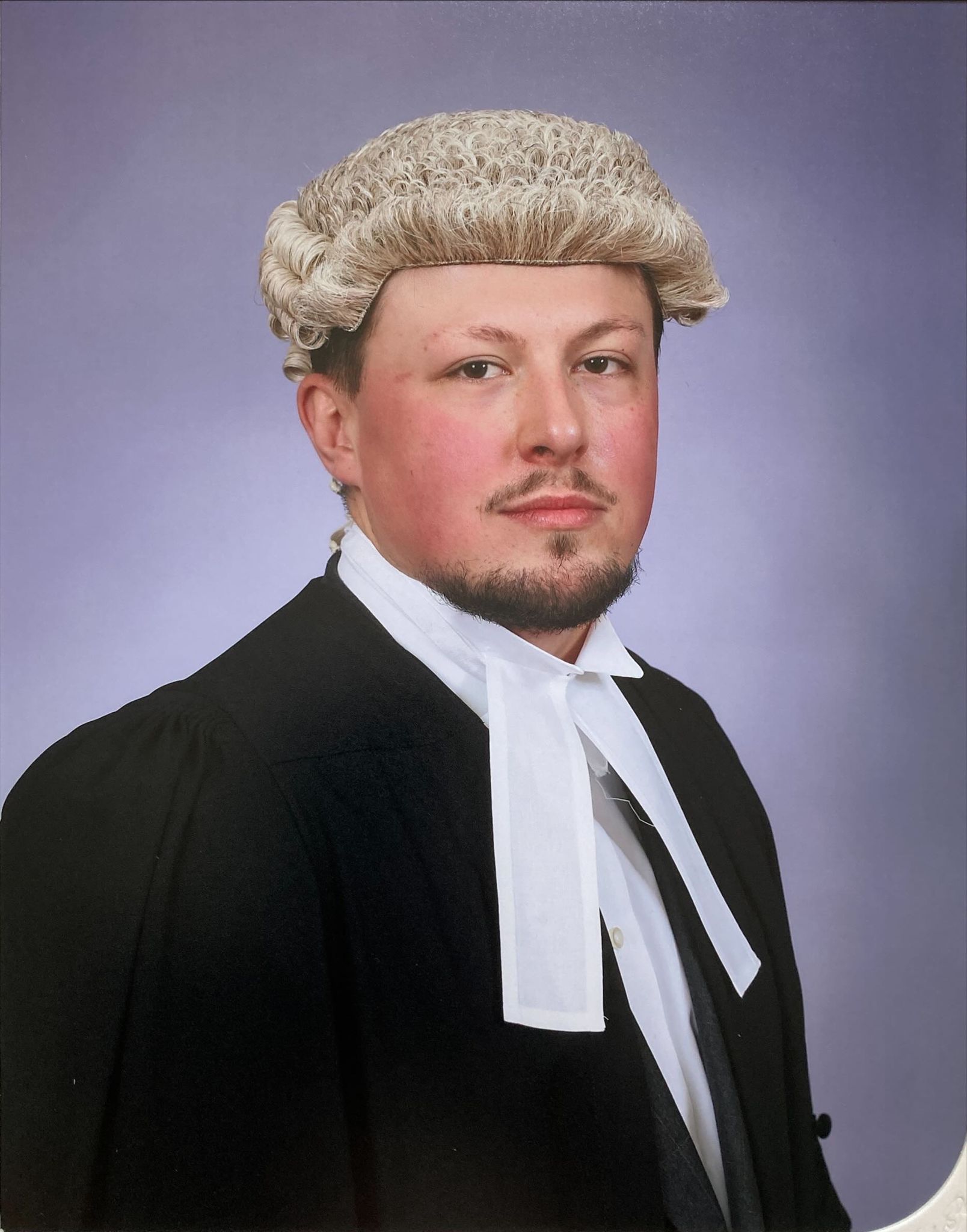
Max Taylor: A Role for Parliament in Independent Judicial Appointments: A Comparison with the Comptroller and Auditor General
The Starmer ministry plans to ‘…deepen our democracy by reforming Parliament…’, but missing from its proposals is any reconsideration of whether Parliament should adopt a role in judicial appointments somewhat analogous to that of the US Senate in federal judicial appointments (US Constitution, Art II, s 2). Debate about such a proposal has recurred from…
-

Nicholas Reed Langen: The Use and Abuse of Citizenship Deprivation: SSHD v Kolicaj
Any British citizen that happens to hold citizenship for another country could find themselves in an invidious position. If the Home Secretary decides that it would be ‘conducive to the public good’, they can single-handedly strip a person of their citizenship, and with it, their right to remain in the country. So long as the deprivation…